


Portfolio

Embroidery digitizing before and after

Every example on this page is a real customer job: the artwork we were sent, and the file we sent back. Drag the handle on any example to compare the two. The note under each one says what the file actually had to solve, because that is where a design succeeds or fails on the machine.

Customer logos are only shown with written permission, so some of our work is not here.

  • 13 before and after examples
  • Standard turnaround 4–8 hours
  • Hand-digitized by our employed team
01 How to read these

Four things worth checking in any digitized file.

Use these on our examples, and on files from anyone else you are considering.

Small lettering
Letters under about 5mm fill in when the stitch spacing is wrong. Look at whether the counters, the holes in a, e and o, are still open.
Edges and outlines
Satin edges should sit cleanly on top of the fill, without the fill peeking through or the outline drifting off the shape.
Color count
Every colour is a thread change on your machine. A well-built file carries the image in as few colors as it can.
Direction of the fill
Stitch angles should follow the drawing: fur, feathers and folds all read better when the direction matches the shape.

Jump to: Logos and crests · Mascots and illustrations · Vector redraws

02 Logos and crests 3 examples

Badges and crests that stay readable at chest size.

Crests carry the most detail per millimeter of any embroidery job: outlines, small lettering and layered shapes, all competing for the same space once they are stitched.

Embroidery

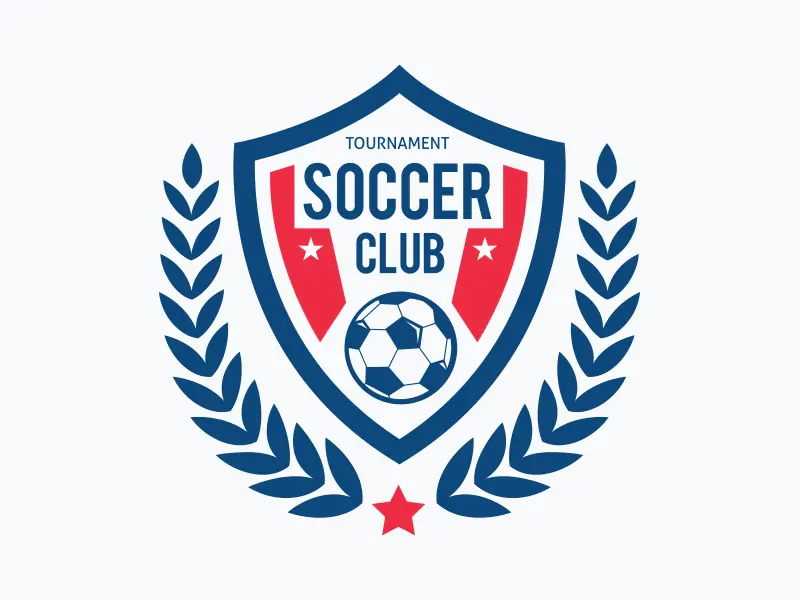
Soccer club crest with laurels

Laurel leaves, a shield, a ball and a club name in one badge. Each leaf is a separate shape, so the file uses satin edges to hold them apart and keeps the lettering above the size where letters fill in.

Similar service →

Embroidery

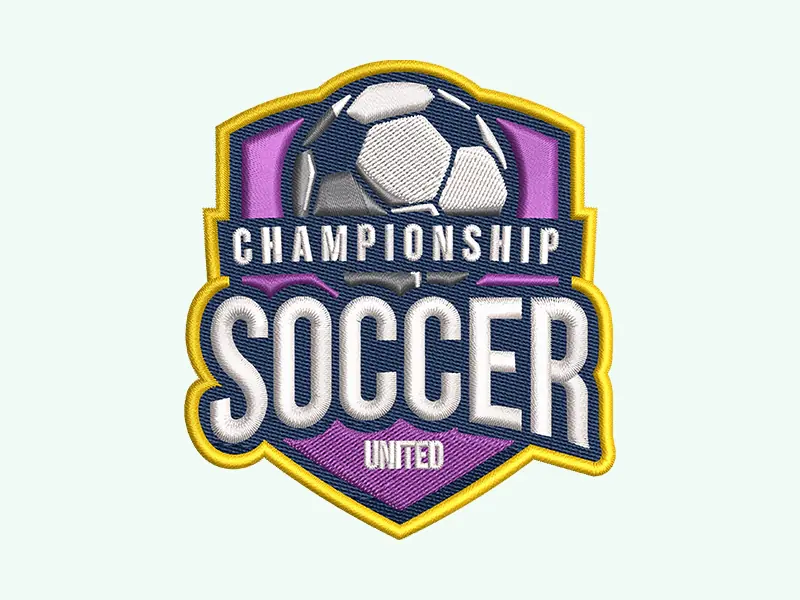
Championship soccer badge

A busy badge with a banner, star and date. Color changes are grouped so the machine runs each color once instead of jumping back and forth across the design.

Similar service →

Embroidery

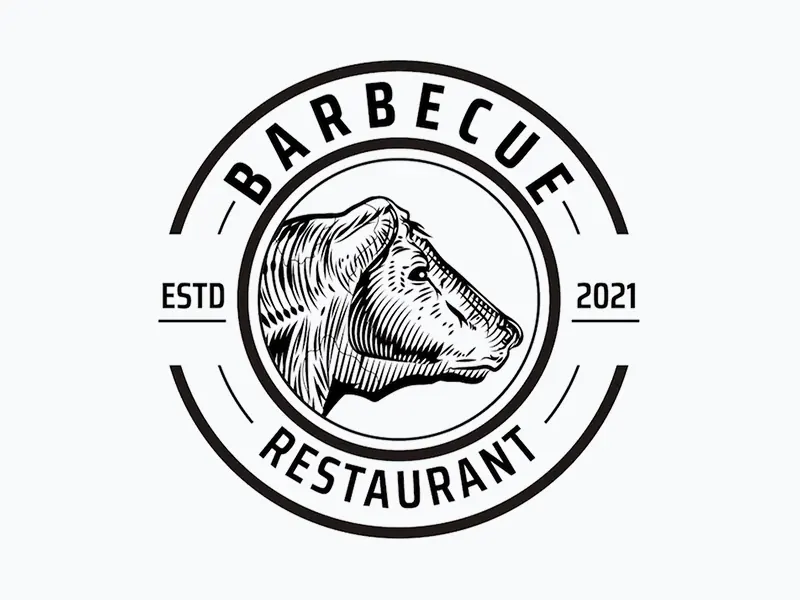
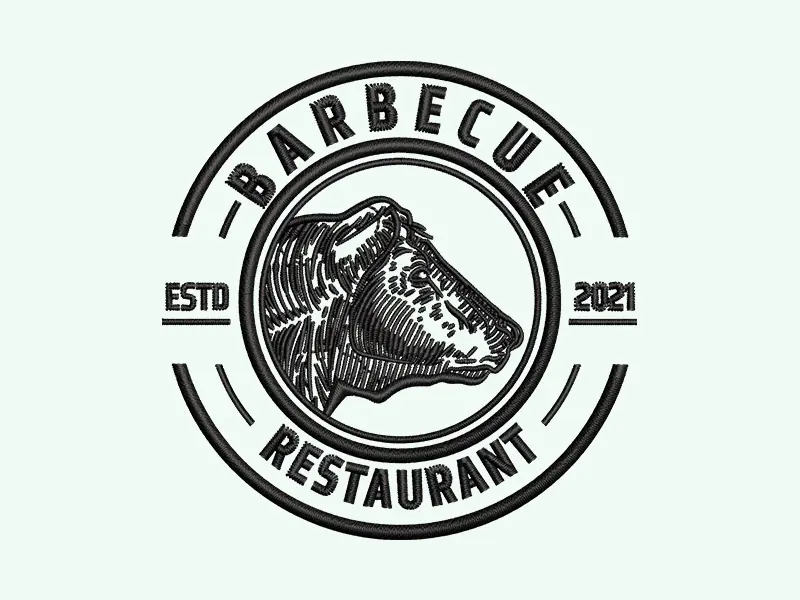
Engraved-style restaurant badge

Engraved line art with fine hatching. The hatching is rebuilt as stitch direction rather than copied line for line, which keeps the badge from turning into a solid block of thread.

Similar service →

03 Mascots and illustrations 6 examples

Illustrations rebuilt as stitches, not as a trace.

Shading, fur and gradients cannot be copied stitch for stitch. A digitizer decides which shapes carry the image and which detail has to go, so the design still reads on fabric.

Embroidery

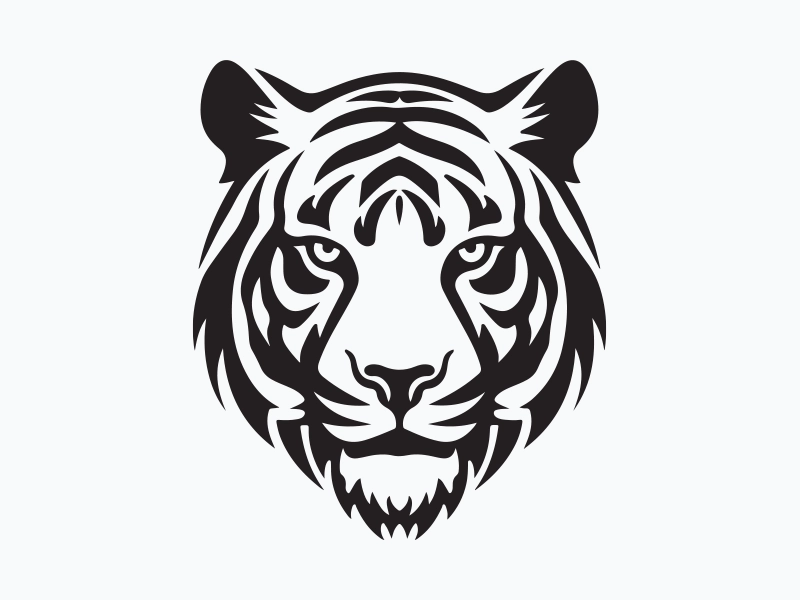
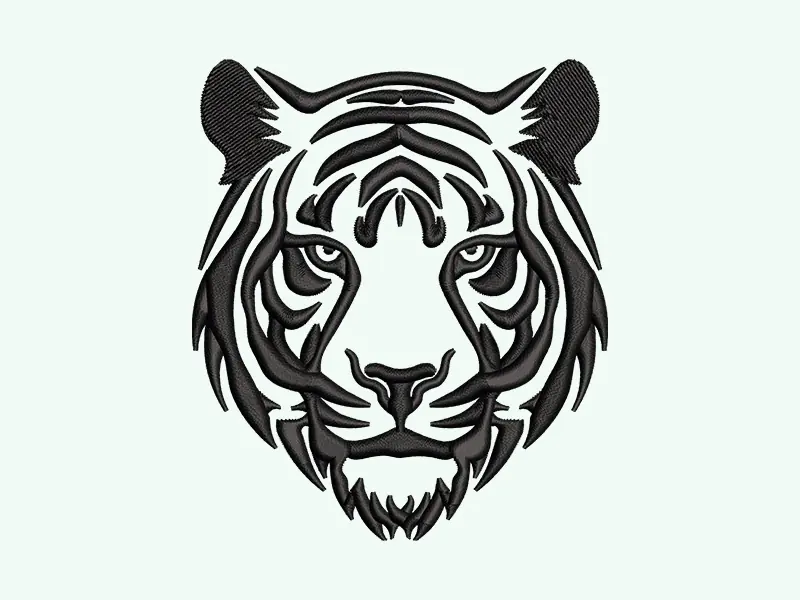
Tiger mascot, full-color fill

Stripes, fur and facial detail in one head. Fill angles follow the direction of the fur so the light catches the thread the way the drawing shades, and color blocks replace the airbrushed gradients.

Similar service →

Embroidery

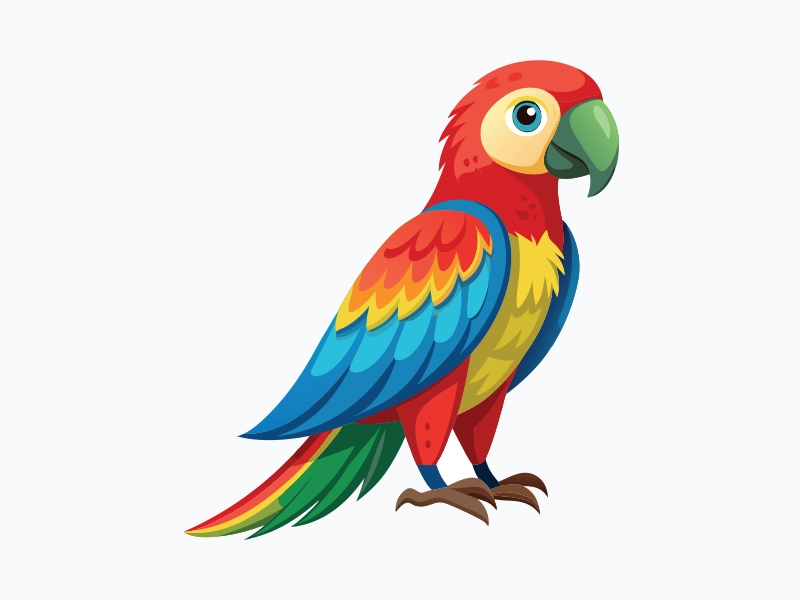
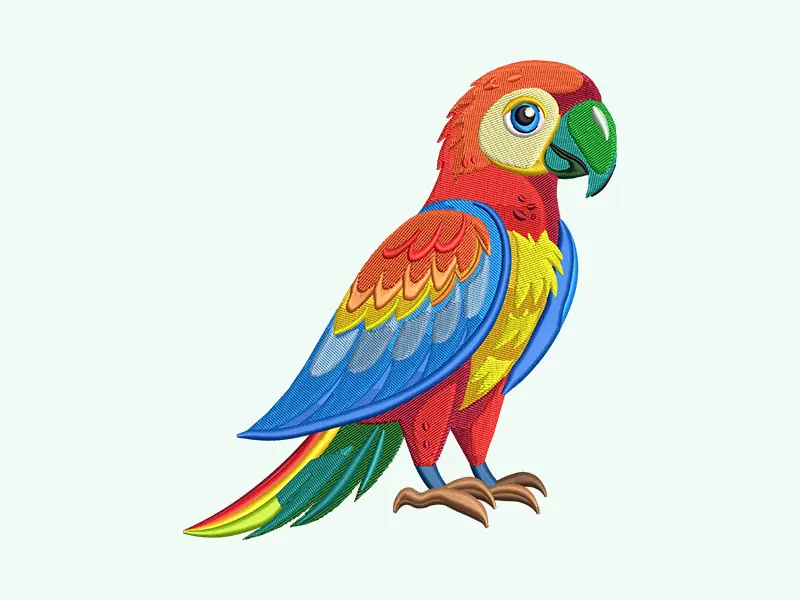
Parrot illustration

Feathers overlap in layers. Each color is stitched as its own shape with a planned order, so the top feathers sit over the ones behind them instead of merging.

Similar service →

Embroidery

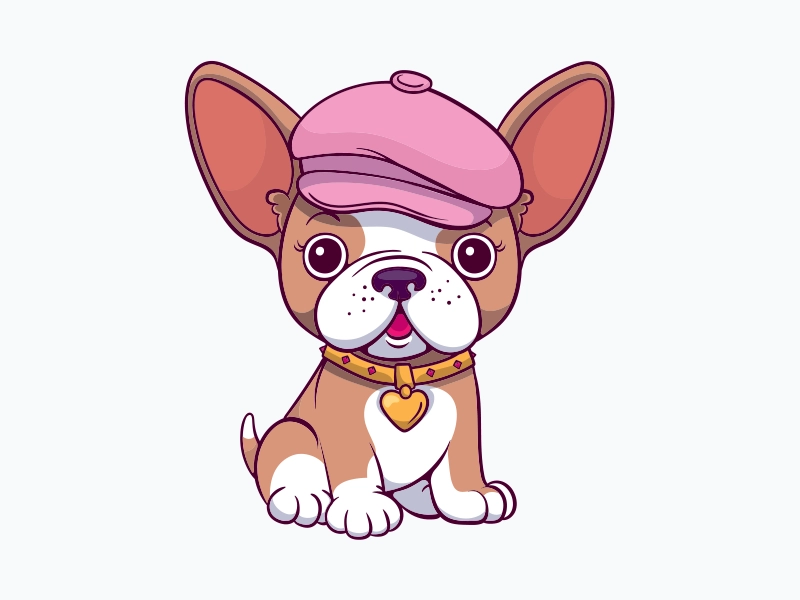
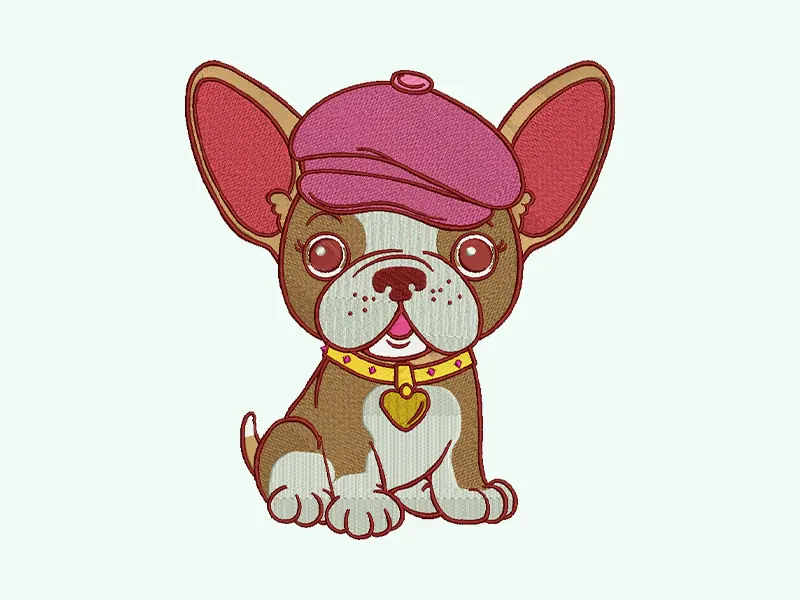
Puppy illustration

Soft fur edges in the artwork become deliberate outlines in thread. Without that decision the shape would blur into the garment color once it is sewn.

Similar service →

Embroidery

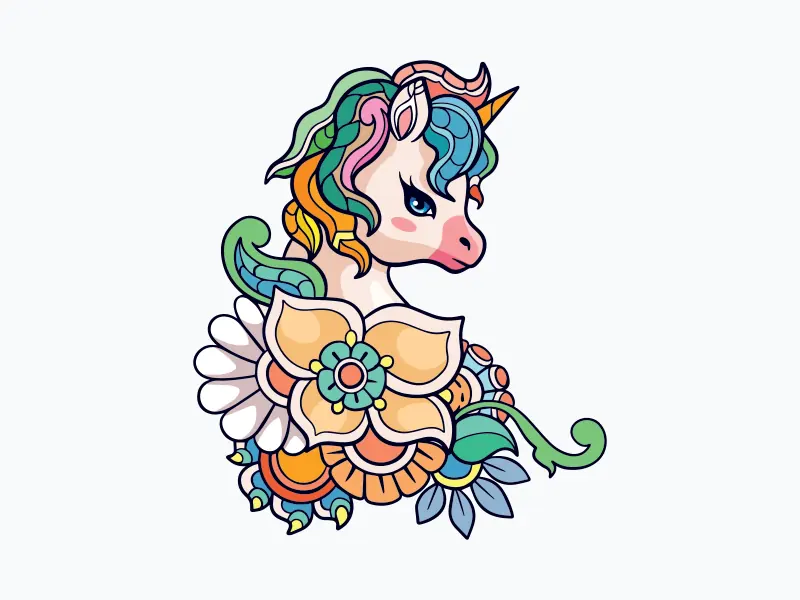
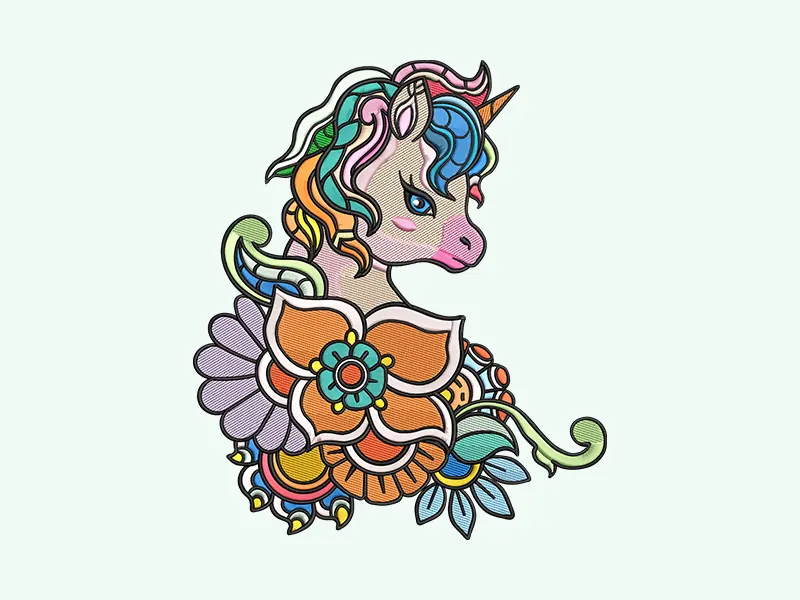
Unicorn with floral detail

Small flowers around a large shape. The flowers are simplified to the smallest stitchable element, and the mane carries the movement instead.

Similar service →

Embroidery

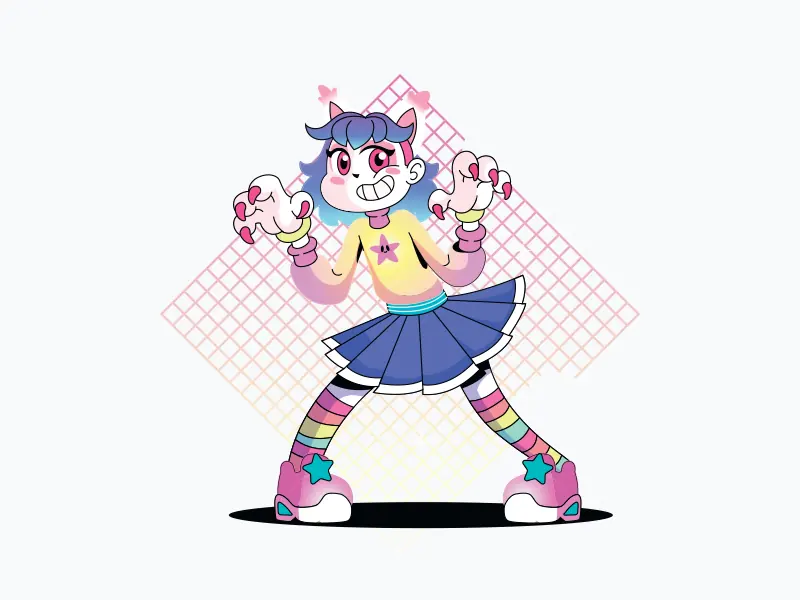
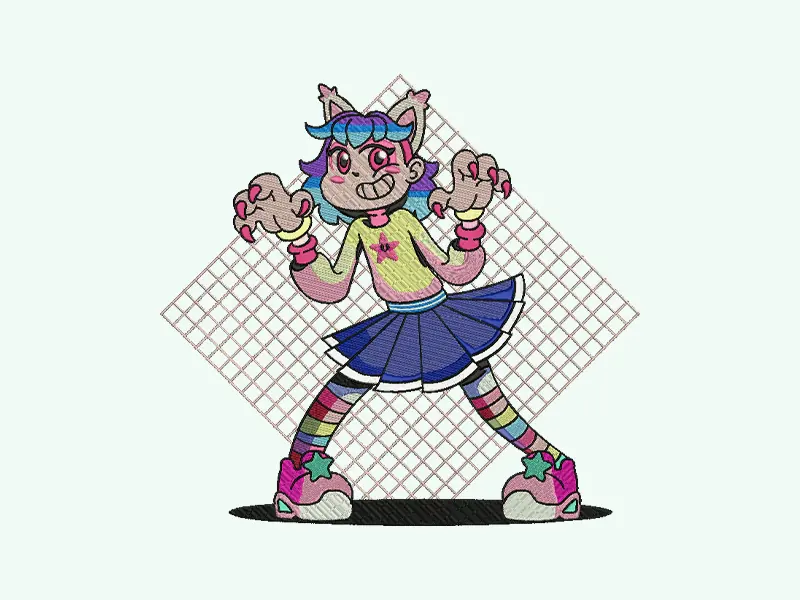
Cartoon character illustration

Faces are unforgiving: a millimeter out on an eye reads as a different character. Facial features are stitched last, on top of a settled fill, so they land where the drawing puts them.

Similar service →

Embroidery

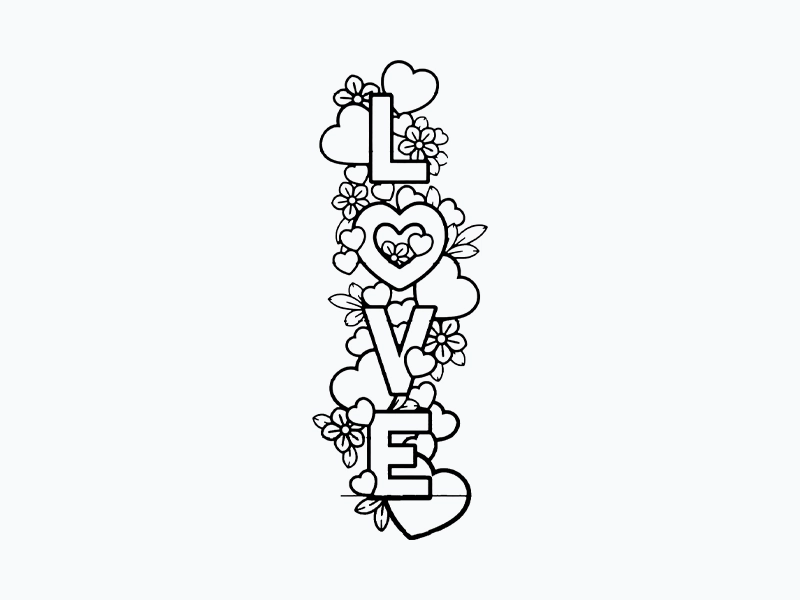
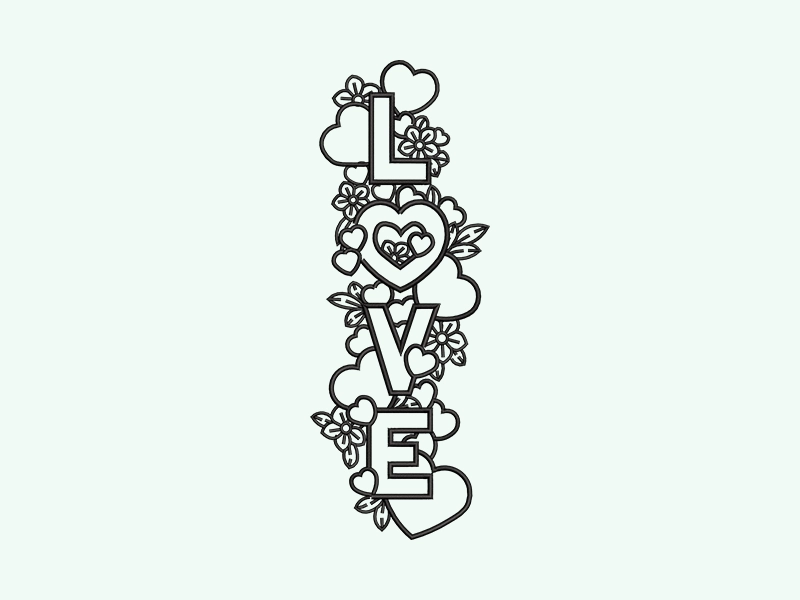
LOVE lettering with hearts and flowers

Script lettering with decorative fill around it. Letter strokes are widened slightly to allow for pull, so the word stays even once the fabric draws in.

Similar service →

04 Vector redraws 4 examples

Blurry artwork redrawn as clean vector files.

Vector work is drawn by hand, not auto-traced: curves are rebuilt, colors separated and edges closed, so the file prints, cuts and digitizes cleanly at any size.

Vector

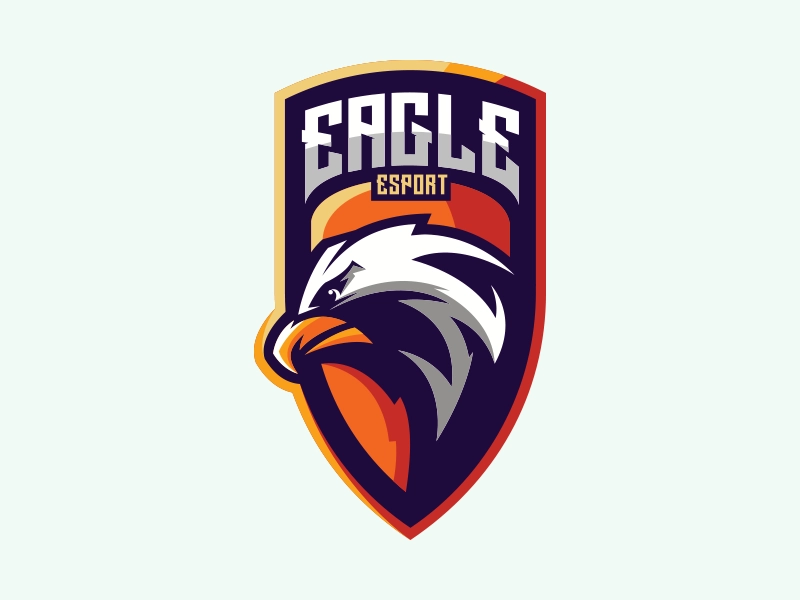
Eagle esports mascot redrawn as a vector

A detailed mascot redrawn as clean paths. Every highlight becomes its own closed shape, so the logo can be scaled to a jersey back or a sticker without softening.

Similar service →

Vector

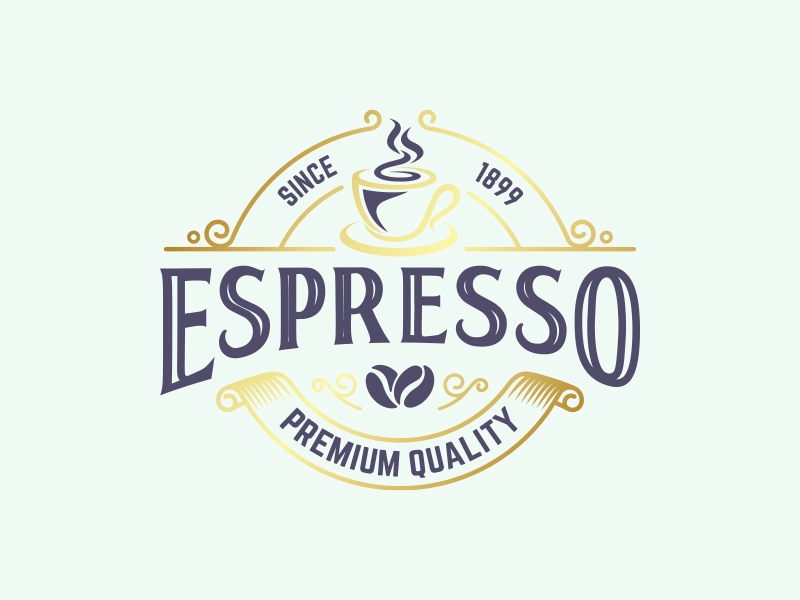
Vintage espresso label

Period lettering and a circular badge. The curves are rebuilt by hand so the type keeps its character instead of picking up the wobble an auto-trace leaves behind.

Similar service →

Vector

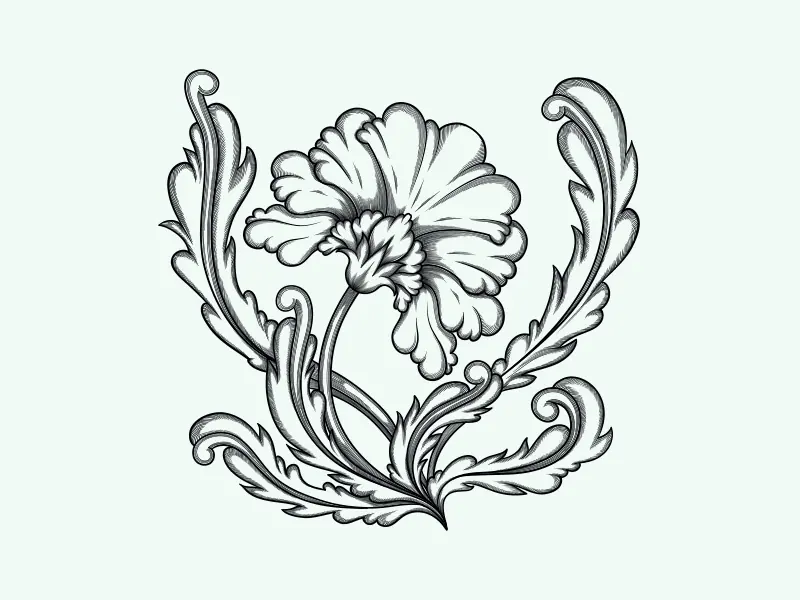
Floral ornament

Symmetrical ornament with thin stems. Paths are closed and mirrored so the pattern can be cut, printed or digitized later without gaps.

Similar service →

Vector

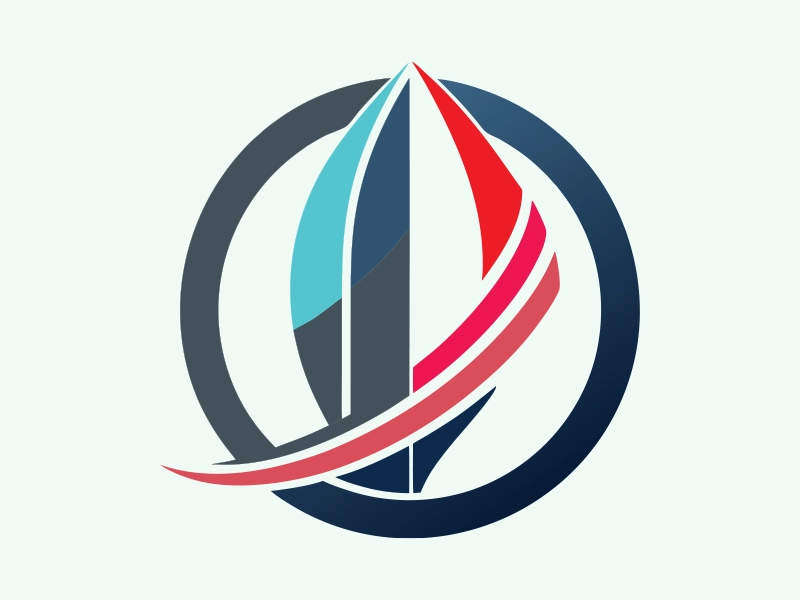
Blurry logo redrawn as a clean vector

The kind of file most orders start with: a low-resolution JPG pulled from a website. Edges are rebuilt, colors separated and text set as real shapes.

Similar service →

05 Your design

Sending us a design like these.

Artwork does not have to be perfect. Most orders start with a JPG or PNG pulled off a website, a photo of an old shirt, or a PDF from a designer who has long since moved on. A digitizer rebuilds it either way.

What matters more is the detail around the artwork: the garment, the finished size in inches or millimetres, and the machine format you run. Those three decide density, underlay and how much detail survives.

If the artwork will not carry at the size you need, we say so before starting, and suggest what to simplify. Our artwork requirements guide covers what to send.

The artwork
Any image or vector file. Higher resolution helps, but a rough file is workable.
Garment and placement
Left chest polo, cap front, jacket back, towel: each changes the build.
Finished size
The embroidered size, not the size of the image file.
Machine format
DST, PES, JEF, VP3, EXP, HUS or TAP. Every format is included.
07 Questions

Questions about these examples.

The left half is the artwork a customer sent us. The right half is a photograph or simulation of the finished file: the embroidery examples show the design as stitches, and the vector examples show the redrawn artwork. Drag the handle on any example to compare the two.
Yes. Detailed, many-color and photo-style designs are priced as Complex designs at $22. Send the image with the finished size and the garment, and your digitizer confirms the tier and what will need simplifying before any work starts.
One flat price per design, never per 1,000 stitches: $10 simple, $15 medium and $22 complex. Vector redraws start at $8. The price list covers caps, 3D puff, patches and appliqué.
Standard turnaround is 4–8 hours, rush 2–4 hours and super rush 1–2 hours, with rush and super rush adding +50%. The team works 24/7.
Yes. Every example here was built by a digitizer on our employed team, never auto-converted, and checked by a second digitizer before delivery. Our guide explains what auto-digitizing gets wrong.
Only if you tell us we can show it. Customer logos stay off this page unless we have written permission, which is why some of our work is not shown here.

Send a design like these.

Send your artwork and we confirm the price before any work starts. Standard files arrive in 4–8 hours, rush in 2–4 hours and super rush in 1–2 hours, 24/7.

Hand-digitized by our own employed team, never auto-digitized
Unlimited revisions, no time limit
Every machine format and a stitch simulation preview included
US LLC, W-9 on file and itemized invoices
First design free: one per new registered business, Simple or Medium, standard turnaround
How your order works
1
Upload your artwork
Any format. Tell us the garment, finished size and machine.
2
We confirm the price
One flat price per design, agreed before we start.
3
File back in 4–8 hours
All formats plus a stitch simulation preview. Rush 2–4 hours (+50%).
4
Unlimited revisions
Reply to your delivery email with any change.
Upload artwork, get a price →

First design free · Trade accounts · Digitizing since 2015

Upload artwork Call